Three Questions with… Sam Kim, Chief Operating Officer
Sam is leading our efforts to bolster our capabilities in data and tech.
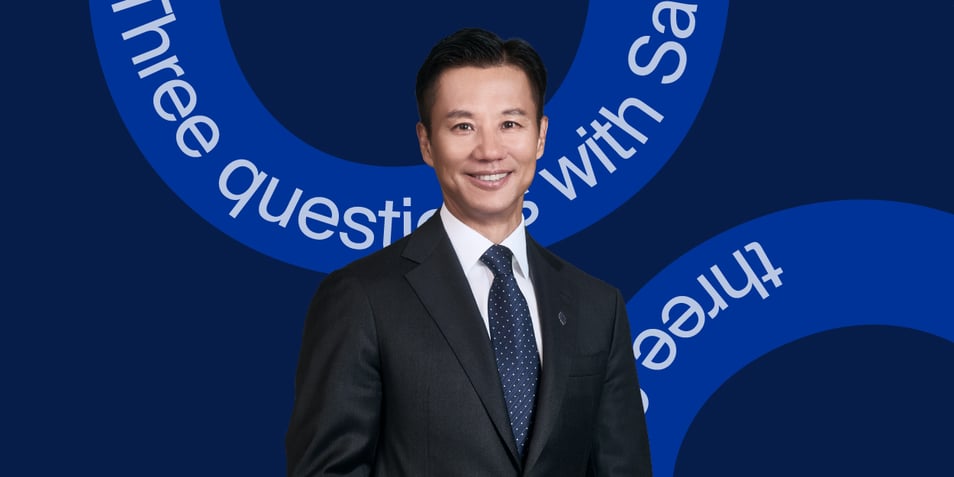
GIC is making bold moves to improve its tech stack, with our Chief Operating Officer Sam Kim spearheading this effort. Hear from him what this entails and why it matters.
As the COO, you’ve come up with many ideas to improve GIC’s data and technology capabilities. Which three initiatives are you most excited about?
I’m looking forward to three key projects that will solidify GIC’s technology strategy and support our long-term growth.
1) Establishing an Enterprise Architecture Blueprint
Think of GIC’s technology estate as a house expanded over time. Some additions fit well, while others introduced challenges—duplicated efforts or systems that don’t communicate effectively. We decided to step back and design a unified technology blueprint. This blueprint ensures that each new system supports the overall framework, helping us avoid technical debt and disjointed solutions. By prioritizing a single roadmap, we create a stable foundation that allows us to grow in a measured way.
2) Evolving Our Data Ecosystem
Over the years, our data sources have become tangled—imagine a plate of spaghetti with conflicting definitions and outdated references. We’re reworking this into more of a well-structured “lasagna.” Each layer, centered around an Enterprise Data Service Layer, is clearly defined, making it easier to update, share, and trust our information. Teams no longer have to reconcile multiple versions of the same data, so they can focus on higher-value analysis and collaboration.
3) Moving Towards an AI-Enabled GIC
AI has the potential to transform how we operate and make decisions. Picture arriving at work with an AI Research Assistant that has already scanned market news, identified potential risks, and summarized insights for the day. This approach frees employees to devote brainpower to strategic thinking, team discussions, and innovation. Over time, AI capabilities will seamlessly underlie many of our daily processes, delivering key information at the right moment.
How will these ideas help GIC?
A well-executed enterprise architecture means we adopt technology with intent. Each platform or application is selected and designed to fit into our overall systems map. This avoids the slowdowns and frustrations that occur when disconnected tools create siloed data or operational headaches.
By rebuilding our data ecosystem, we remove the guesswork around which findings are up-to-date or most accurate. Instead of verifying multiple reports, teams can access a single source of truth. That clarity accelerates decision-making and fosters trust between departments.
AI then complements this structure by taking over repetitive tasks—like collecting market signals or drafting routine reports—so we can focus on deeper analysis and strategic moves. When smart technologies sit on top of a unified architecture and clean data, we gain agility in how we approach opportunities and respond to changes in the market.
Could you share real examples of how GIC is applying artificial intelligence?
We’re already seeing direct benefits from AI in two areas:
1) Driving Efficiencies and Creating Capacity
We have an AI-based tool that speeds up the drafting of minutes, summaries, and internal communications. What used to take hours now often takes just minutes. We’re also rolling out an AI-driven search function that scours policies, guidelines, and archives in seconds. Meanwhile, our “ChatGIC” service, deployed within a secure environment, enables quick analysis of multiple uploaded files, saving time otherwise spent on organizing large volumes of data.
2) Advanced AI for Investment Intelligence
Picture an AI “team member” at our Investment Committee (IC) sessions—this tool reads memos, flags missed risks, and transcribes discussions in real time. It learns from our Deal Evaluation Framework and hones its approach with each interaction. Next on our roadmap is a Research Assistant that will gather insights from both internal data and external sources, providing timely, context-driven recommendations aligned with our risk-return philosophy. Collectively, these integrations reduce administrative burdens and boost the speed at which teams can process complex information, making GIC nimbler and more competitive.
All these initiatives serve two core goals I emphasize: Operational Excellence and Enterprise Excellence. Operationally, we want technology that’s thoughtful, efficient, and resilient, reducing our reliance on short-term fixes. At the enterprise level, standardizing data and embedding AI across the organization helps unify teams and eliminate silos, driving sharper collaboration. I’m eager to see how these projects will enhance GIC’s ability to innovate, adapt, and stay ahead in an ever-evolving market environment.